
plant based meal plan pdf
Embarking on a plant-based journey offers numerous health and environmental advantages. This guide explores crafting personalized meal plans,
leveraging readily available resources, and achieving optimal nutrition through diverse, delicious, and sustainable food choices.

What is a Plant-Based Diet?
A plant-based diet prioritizes foods derived from plants, encompassing fruits, vegetables, legumes, whole grains, nuts, and seeds. It’s not necessarily synonymous with veganism or vegetarianism, though those fall under the plant-based umbrella. The core principle is centering your meals around plant sources, potentially including small amounts of animal products.
Essentially, it’s a dietary pattern focused on abundance – abundant fruits and vegetables, abundant whole grains, and abundant plant proteins. This approach naturally reduces processed foods, unhealthy fats, and added sugars. Many individuals adopt plant-based eating for health benefits, ethical considerations, or environmental sustainability.
Unlike restrictive diets, plant-based eating emphasizes what you can eat, fostering a positive relationship with food. It’s a flexible lifestyle, adaptable to individual preferences and needs, making it a sustainable long-term approach to wellness. Finding a plant based meal plan pdf can help you get started!
Benefits of a Plant-Based Diet
Adopting a plant-based diet offers a wealth of health advantages. Research indicates a reduced risk of heart disease, type 2 diabetes, and certain cancers. The high fiber content promotes digestive health and helps maintain a healthy weight. Plant-based foods are naturally lower in saturated fat and cholesterol, contributing to cardiovascular wellness.
Furthermore, increased fruit and vegetable intake provides essential vitamins, minerals, and antioxidants, bolstering the immune system and protecting against cellular damage. A well-planned plant-based diet can also support athletic performance, providing sustained energy and aiding in muscle recovery.
Beyond personal health, plant-based eating has a positive environmental impact, reducing the demand for resource-intensive animal agriculture. Many find it aligns with ethical values regarding animal welfare. Utilizing a plant based meal plan pdf can streamline the transition and ensure nutritional completeness, maximizing these benefits.
Creating Your Plant-Based Meal Plan
Personalizing your plan involves assessing dietary needs and preferences. A plant based meal plan pdf serves as a fantastic starting point, offering structure and recipe ideas for success.

Determining Calorie Needs
Establishing your daily calorie requirements is fundamental to a successful plant based meal plan pdf implementation. Several factors influence this, including age, sex, weight, height, and activity level. Online calculators provide estimations, but consider consulting a registered dietitian for personalized guidance.
A plant based meal plan pdf often outlines calorie ranges for different goals – weight loss, maintenance, or gain. Generally, a moderately active adult requires around 2,000 calories daily. To lose weight, a deficit of 500 calories per day can lead to approximately one pound of weight loss per week. Conversely, adding 250-500 calories supports weight gain.
Remember, these are starting points. Monitor your weight and energy levels, adjusting calorie intake accordingly. A plant based meal plan pdf should be adaptable to your individual needs and progress. Prioritize nutrient-dense foods to maximize health benefits within your calorie target.
Macronutrient Breakdown (Protein, Carbs, Fats)
A well-structured plant based meal plan pdf emphasizes a balanced macronutrient ratio. While individual needs vary, a general guideline is 50-55% carbohydrates, 20-30% protein, and 20-30% fats. Carbohydrates should primarily come from whole grains, fruits, and vegetables, providing sustained energy.
Protein intake is crucial, especially on a plant-based diet. Aim for 0.8-1 gram of protein per kilogram of body weight. Excellent sources include legumes (beans, lentils), tofu, tempeh, and quinoa. A plant based meal plan pdf will detail protein-rich meal options.
Healthy fats, found in avocados, nuts, seeds, and olive oil, are essential for hormone production and nutrient absorption. Prioritize unsaturated fats over saturated and trans fats. A thoughtfully designed plant based meal plan pdf ensures adequate intake of all three macronutrients for optimal health and performance.
Essential Amino Acids for Vegans
A comprehensive plant based meal plan pdf acknowledges the importance of essential amino acids – the building blocks of protein that the body cannot produce itself. Vegans must consciously combine plant proteins to ensure they obtain all nine essential amino acids.
Lysine, methionine, and tryptophan are often limiting amino acids in plant-based diets. Combining legumes with grains, nuts, or seeds creates complete proteins. For example, rice and beans, or hummus with whole-wheat pita bread, provide a full amino acid profile.
Research indicates vegans may need to pay particular attention to adequate intake. A well-planned plant based meal plan pdf will showcase recipes and meal combinations designed to deliver sufficient quantities of each essential amino acid, supporting muscle growth, immune function, and overall health. Careful planning is key to thriving on a vegan diet.

Sample 7-Day Plant-Based Meal Plan (1800 Calories)
This 7-day plan, detailed in a plant based meal plan pdf, provides 1800 calories daily, with at least 80g protein and 30g fiber, requiring 30 minutes or less preparation.
Day 1: Focus on Legumes
Day 1 of this plant based meal plan pdf emphasizes legumes – nutritional powerhouses packed with protein and fiber. Begin with a hearty breakfast of oatmeal prepared with plant-based milk and topped with a tablespoon of chia seeds. For lunch, enjoy a vibrant lentil soup accompanied by a whole-grain roll.
The dinner centerpiece is a flavorful black bean burger on a whole-wheat bun, served with a side of roasted sweet potatoes and a mixed green salad. A small handful of almonds serves as a satisfying afternoon snack. Legumes contribute significantly to meeting daily protein requirements, crucial for muscle maintenance and overall health.
This day’s focus ensures adequate intake of essential amino acids, often a concern for those new to plant-based eating. Remember to drink plenty of water throughout the day to aid digestion and nutrient absorption. This legume-rich day sets a strong foundation for the week ahead.
Day 2: Incorporating Whole Grains
Day 2 of this plant based meal plan pdf centers around the inclusion of wholesome, unrefined whole grains. Start your day with a quinoa porridge, sweetened with berries and a drizzle of maple syrup. Lunch features a brown rice bowl brimming with roasted vegetables – broccoli, bell peppers, and carrots – tossed in a tahini dressing.
Dinner consists of a hearty whole-wheat pasta dish with a lentil-based tomato sauce and a side salad. A mid-afternoon snack of whole-grain crackers with hummus provides sustained energy. Whole grains are excellent sources of complex carbohydrates, offering a slow and steady release of energy throughout the day.
They also contribute valuable fiber, aiding digestion and promoting gut health. Prioritize variety in your whole grain choices – quinoa, brown rice, oats, and whole-wheat bread – to maximize nutrient intake. Hydrate well to support optimal digestion and absorption.
Day 3: Variety of Vegetables
Day 3 of this plant based meal plan pdf emphasizes the incredible diversity of the vegetable kingdom. Begin with a vibrant green smoothie – spinach, kale, banana, and plant-based milk – for a nutrient boost. Lunch is a large salad featuring a rainbow of vegetables: romaine lettuce, cherry tomatoes, cucumbers, shredded carrots, and bell peppers, topped with a light vinaigrette.
Dinner showcases roasted root vegetables – sweet potatoes, parsnips, and beets – seasoned with herbs and spices. A side of steamed asparagus completes the meal. Snacking on raw vegetable sticks (carrots, celery, and cucumber) with guacamole provides a satisfying crunch.
Vegetables are packed with vitamins, minerals, and antioxidants, crucial for overall health. Aim for a wide range of colors to ensure a broad spectrum of nutrients. Don’t be afraid to experiment with different cooking methods – roasting, steaming, grilling – to enhance flavor and texture.
Day 4: Nut and Seed Power
Day 4 of this plant based meal plan pdf spotlights the nutritional benefits of nuts and seeds. Start your day with oatmeal prepared with plant-based milk, topped with a tablespoon of chia seeds and a handful of walnuts. These additions provide healthy fats, fiber, and protein for sustained energy.
Lunch features a quinoa salad with mixed greens, chopped almonds, sunflower seeds, and a lemon-tahini dressing. Dinner consists of lentil shepherd’s pie, topped with a mashed sweet potato and sprinkled with pumpkin seeds.
Nuts and seeds are excellent sources of essential fatty acids, vitamins, and minerals; They contribute to heart health and brain function. Be mindful of portion sizes, as they are calorie-dense. Incorporate a variety of nuts and seeds into your diet for optimal nutritional benefits.
Day 5: Fruit-Forward Day
Day 5 of this plant based meal plan pdf emphasizes the natural sweetness and vital nutrients found in fruits. Begin with a vibrant smoothie made from berries, banana, spinach, and plant-based milk – a quick and energizing breakfast. This provides essential vitamins and antioxidants to kickstart your day.
Lunch is a large mixed fruit salad with a sprinkle of hemp seeds for added protein and healthy fats. Dinner features a black bean and mango salsa served with brown rice. Throughout the day, enjoy fruit as snacks – an apple with almond butter, or a handful of grapes.
Fruits are naturally low in fat and sodium, and rich in fiber. They support digestive health and boost immunity. Remember to choose whole fruits over juices for maximum fiber intake.
Day 6: Combining Proteins
Day 6 of this plant based meal plan pdf focuses on strategically combining plant-based protein sources to ensure complete amino acid profiles. Start with a tofu scramble with spinach and nutritional yeast for a savory, protein-rich breakfast. This provides a substantial start to the day.
Lunch features a quinoa salad with chickpeas, cucumber, tomatoes, and a lemon-tahini dressing. Quinoa and chickpeas complement each other, offering a complete protein source. Dinner consists of lentil shepherd’s pie topped with mashed sweet potatoes.
Combining legumes with grains, nuts, or seeds throughout the day is key for vegans to obtain all essential amino acids. This approach maximizes protein absorption and supports muscle health. Don’t forget a handful of almonds as a snack!
Day 7: Balanced Approach
Day 7 of this plant based meal plan pdf emphasizes a balanced intake of all macronutrients and micronutrients, solidifying healthy habits. Begin with oatmeal prepared with plant milk, topped with berries and a tablespoon of chia seeds – a fantastic source of fiber and omega-3s.
Lunch is a large mixed green salad with tempeh bacon, avocado, and a light vinaigrette. Tempeh provides a hearty protein boost, while avocado offers healthy fats. Dinner features a black bean burger on a whole-wheat bun with a side of roasted vegetables.
This final day reinforces the principles of variety and mindful eating. It’s about creating sustainable habits, not restriction. Enjoy a small piece of dark chocolate as a treat, and remember to stay hydrated throughout the day!
Modifying the Plan for Different Calorie Levels
Adjusting portion sizes and adding healthy snacks easily adapts this plant based meal plan pdf to 1500 or 2000 calories, meeting individual energy needs.
1500 Calorie Plan Adjustments
For a 1500-calorie plant based meal plan pdf, reducing portion sizes is key. Begin by decreasing grain servings – for example, reducing rice or quinoa from ½ cup to ¼ cup per meal. Similarly, lower legume portions (beans, lentils) to approximately ½ cup. Focus on maximizing non-starchy vegetables like leafy greens, broccoli, and peppers, increasing their volume while keeping calorie intake low.
Limit nuts and seeds to 1-2 tablespoons per day, as they are calorie-dense. Reduce fruit intake to 1-2 servings daily, prioritizing lower-sugar options like berries. When utilizing oils, measure carefully – aim for no more than 1 teaspoon per meal. Prioritize water consumption throughout the day to promote fullness and aid digestion. Consider incorporating calorie-free seasonings and herbs to enhance flavor without adding calories. Careful planning and mindful eating are crucial for success on this lower-calorie plan.
2000 Calorie Plan Adjustments
To adapt a plant based meal plan pdf to 2000 calories, increase portion sizes moderately. Add approximately ½ cup of whole grains (brown rice, quinoa, oats) to your daily intake, distributing it across meals. Boost legume servings to ¾ cup per meal, ensuring adequate protein consumption. Incorporate healthy fats more liberally – increase nut and seed intake to 2-3 tablespoons daily, and use 1-2 teaspoons of olive oil or avocado oil per meal.
Include 2-3 servings of fruit daily, selecting a variety of options. Consider adding a small serving of avocado or a tablespoon of nut butter to snacks for added calories and satiety. Ensure you’re still prioritizing whole, unprocessed foods and maintaining a balance of macronutrients. This increased calorie level allows for greater flexibility and can support higher activity levels or muscle-building goals.

Plant-Based Recipes for Meal Planning
Discover a wealth of flavorful, easy-to-prepare recipes perfect for your plant based meal plan pdf. These options streamline meal prep and ensure dietary success!
Breakfast Recipes
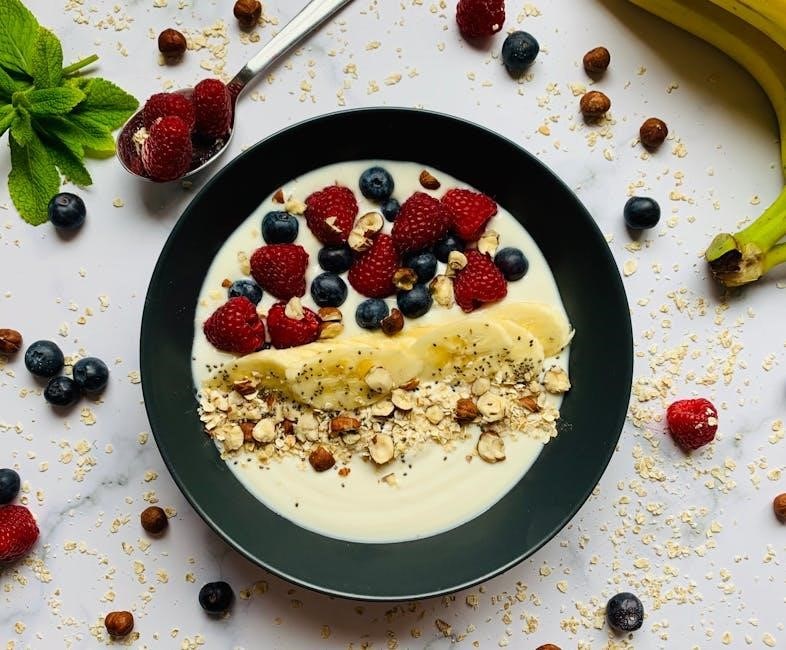
Start your day with nourishing plant-based breakfasts! Consider overnight oats with berries and seeds – prepare the night before for a quick morning meal. Tofu scrambles, seasoned with turmeric and nutritional yeast, offer a protein-packed alternative to eggs. Smoothies are incredibly versatile; blend fruits, leafy greens, plant-based milk, and a scoop of protein powder for a fast and fulfilling option.
Whole-grain toast topped with avocado and everything bagel seasoning provides healthy fats and fiber. For a sweeter treat, try banana pancakes made with whole-wheat flour and plant-based milk. Chia seed pudding, soaked overnight in plant-based milk with a touch of maple syrup, is another convenient and nutritious choice. These recipes, easily incorporated into your plant based meal plan pdf, will fuel your mornings and support your overall health. Remember to adjust portion sizes based on your individual calorie needs.
Lunch Recipes
Fuel your afternoons with satisfying plant-based lunches! Large salads featuring a variety of colorful vegetables, legumes (like chickpeas or lentils), and a healthy dressing are a fantastic option. Quinoa bowls with roasted sweet potatoes, black beans, and avocado provide a complete protein source and sustained energy. Wraps filled with hummus, sprouts, and sliced vegetables are quick and portable.
Soup is another excellent choice, especially during colder months – lentil soup or black bean soup are both hearty and nutritious. Leftovers from dinner can also make a convenient lunch. Consider a plant-based “tuna” salad sandwich using mashed chickpeas instead of tuna. These recipes, easily found within a comprehensive plant based meal plan pdf, offer variety and ensure you’re getting essential nutrients. Remember to pack a piece of fruit or a handful of nuts for a complete and balanced meal.
Dinner Recipes
Elevate your evenings with flavorful and nourishing plant-based dinners! Stir-fries brimming with tofu, broccoli, and brown rice are quick and easy to prepare. Lentil shepherd’s pie offers a comforting and hearty meal, swapping traditional meat for protein-rich lentils. Black bean burgers served on whole-wheat buns with a side salad are a satisfying alternative to beef burgers;
Pasta dishes featuring vegetable-based sauces, like a creamy cashew pesto or a vibrant tomato and spinach sauce, are always a hit. Roasted vegetable medleys with chickpeas and a tahini dressing provide a nutrient-packed and flavorful option. A plant based meal plan pdf will often include detailed recipes for these dishes, simplifying your cooking process. Don’t forget to incorporate a variety of spices and herbs to enhance the taste and nutritional value of your meals!

Resources for Plant-Based Meal Plan PDFs
Numerous online platforms offer downloadable plant based meal plan pdf resources to streamline your transition. Websites dedicated to vegan and vegetarian lifestyles frequently provide free sample plans, ranging from 7-day to 30-day options, catering to various calorie levels and dietary needs. Registered Dietitian Nutritionists specializing in plant-based diets often have downloadable guides available on their websites, offering professionally curated meal plans.
Several health and wellness blogs also compile and share free meal plans, alongside accompanying grocery lists and recipes. Consider exploring resources from organizations promoting plant-forward eating, as they often provide evidence-based meal planning tools. Remember to evaluate the source’s credibility and ensure the plan aligns with your individual health goals and preferences before committing to it. Many offer customizable options, allowing you to tailor the plan to your specific requirements.